Entry · Ref PYFCPX2U
Why Small Assisted Living Homes Foster Stronger Links in Dementia Care
- Posted
- 2026-09-30
- Last amended
- 2026-09-30
- Account
- @edwinyvtq893
Business Name: BeeHive Homes of Collierville
Address: 1368 Wolf River Blvd, Collierville, TN 38017
Phone: (901) 286-3455
BeeHive Homes of Collierville
At BeeHive Homes of Collierville, Tennessee, we offer the finest assisted living and memory care experience available in a cozy, comfortable homelike 21 bedroom setting. Each of our residents has their own spacious room with an ADA approved bathroom and shower. We prepare and serve delicious home-cooked meals three times a day every day. We maintain a small, friendly elderly care community. We provide regular activities that our residents find fun and contribute to their health and well-being. Our staff is attentive and caring and provides assistance with daily activities to our senior living residents in a loving and respectful manner. We invite you to tour and experience our assisted living home and feel the difference.
1368 Wolf River Blvd, Collierville, TN 38017
Business Hours
Families typically begin looking for assisted living or memory care after a long stretch of worry. Missed out on medications. The range left on. A parent who was as soon as meticulous now using the exact same clothing for days. By the time dementia care goes into the conversation, most households are currently emotionally broken and attempting to make the "least bad" decision.
The industry responses that fear with scale. Large senior care neighborhoods reveal you the movie theater, the beauty salon, the restaurant-style dining-room, the activities calendar. It looks safe and hectic. For some individuals, it genuinely is the ideal fit.
Yet in my experience, the citizens with dementia who prosper over time tend to live in smaller sized, more intimate assisted living homes. Not because the paint is better, however due beehivehomes.com assisted living to the fact that the small scale makes authentic human connection unavoidable. Staff can not conceal. Locals can not vanish. Households feel understood, not processed.
That difference in scale shapes everything from everyday routines to the way a resident is comforted during a 3 a.m. Bout of agitation. It is much easier to secure dignity, identity, and relationships when less people share the space.
What "little" actually means in assisted living and memory care
"Small" is a slippery word in senior care. I have actually toured neighborhoods that happily advertised "intimate communities" with 40 homeowners per wing, and group homes accredited for 6 people that felt like extended family.
Regulations vary by state, however in practice you tend to see three broad models:
- Large assisted living or memory care communities, typically 60 to 120 locals or more, gotten into pods or "neighborhoods".
- Mid-sized homes, often 20 to 40 citizens, in some cases part of a larger campus.
- True small homes or residential care homes, normally 4 to 12 homeowners, operating out of a home or a purpose-built building sized like a home.
The sweet spot for strong relationships in dementia care is normally that last group, the true little homes. They are common in some regions and practically unnoticeable in others. Numerous families discover them just after someone silently recommends "Have you looked at residential care homes?" or "There's a little memory care home on the edge of town that you might wish to see."
The smaller sized the setting, the harder it is for a resident with dementia to be forgotten, both practically and emotionally.
Why size matters more when dementia is involved
Dementia amplifies the issues that come with living in a crowd. Noise becomes disorienting. Long hallways become challenge courses. A rotating cast of caregivers becomes a source of stress instead of comfort.
In a big assisted living setting, a resident might communicate with a dozen different staff members in a single day: caregivers, nurses, dining staff, house cleaners, activities personnel, med techs, and floaters who cover breaks. For somebody in early-stage memory loss, that can be stimulating. For someone in moderate or sophisticated dementia, it often feels like a blur of new faces and contrasting instructions.
Small memory care homes simplify that world. Life is typically anchored by a little, consistent team. The person with dementia sees the exact same caregivers at breakfast, throughout bathing, and at bedtime. Actions repeat in similar ways: the very same blue mug, the same seat at the table, the same mild voice directing them through the shower. That repetition develops familiarity, and familiarity is the raw material of trust.
Trust in dementia care is not abstract. It shows up in whether a resident accepts assist with toileting, whether they consume a sufficient meal, whether they let someone touch them to guide them away from a fall risk. Stronger connections make every one of those minutes easier and more dignified.
The architecture of connection
The physical layout of a small assisted living home silently pushes individuals toward one another. I remember one four-bedroom residential care home where you could stand in the cooking area and see nearly whatever: the front door, the open living room, the corridor to the bed rooms, and the yard patio.
The result on care was obvious. When a resident began to stand up from a chair, personnel discovered right away. When somebody looked lost, the caretaker slicing veggies might call out, "Hi Helen, we're in here," and Helen would follow the sound of the voice. Locals could roam, but they could not genuinely disappear.
In larger buildings, staff rely greatly on innovation and scheduled rounds to keep an eye on residents. Call bells, door informs, cameras in corridors. Those tools can be helpful, however they are reactive. Something needs to go incorrect first.
In a small home, the layout itself supports early detection. Caregivers see the subtle signs that normally precede crises: a resident circling the very same doorway a number of times, someone who stops signing up with the table for coffee, modifications in posture or gait. Those little shifts in habits are frequently the first flag of an infection, depression, discomfort, or a developing fall risk.
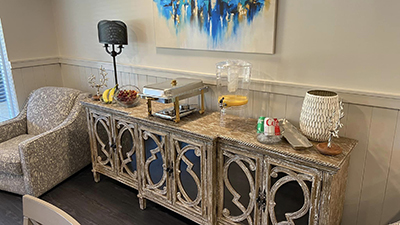
There is another piece that seldom makes the brochure: shared space in a little home generally feels more like a living room and less like a lobby. That matters for connection. People naturally cluster where there is activity, movement, and discussion. If the primary gathering area is the size of a living room rather of a hotel atrium, homeowners are a lot more most likely to see each other, see each other, and in time form the little, regular bonds that make life feel worth living.
How little teams build much deeper relationships
Most households ignore just how much staffing structure affects the psychological tone of dementia care. The task title might be "caretaker" or "resident assistant," but in practice these team members are the main relationship in a resident's life, typically more present than household or friends.
In big senior care neighborhoods, staff scheduling appears like a grid. Locals are appointed to a hall or a section; personnel are designated by shift and ratio. Turnover is greater. Floaters plug staffing holes. A resident may deal with one caregiver for a few weeks, then never ever see them once again if schedules change.
In a little assisted living home, staffing looks more like a lineup of familiar faces. The exact same five to ten individuals cover most shifts. The owner or supervisor typically deals with website, not in a distant office. If somebody calls out, you are more likely to see the supervisor rolling up their sleeves than an unfamiliar firm employee appearing at 10 p.m.
Over time, this consistency permits personnel and residents to build up mutual history. A caretaker finds out that Mr. Jackson relaxes if you give him a warm washcloth to hold while you clean his face, or that Mrs. Chen will just accept her nighttime medications after she enjoys the night news. These details may never ever make it into an official care strategy, but they are the glue that holds daily life together.
For residents with dementia, relationships are not anchored in biography even in sensory memory. They may not keep in mind that a caregiver's name is Maria, but they keep in mind "the one who sings while she makes my coffee" or "the guy who uses the plaid shirts." Little homes make it simpler for those sensory signatures to end up being steady and soothing.
Families feel the distinction too. In a large structure, it is simple to feel like you are disrupting someone's workflow whenever you ask concerns. In a small home, the team is often pleased, even relieved, to sit at the kitchen table and hear detailed stories about your mother's routines and preferences. The more they know, the much easier their work becomes.
Everyday life: small rituals, huge impact
When people imagine memory care, they often think of structured activities: bingo, exercise class, art treatment. These can be helpful, however in little homes, the strongest connections frequently form around ordinary, repeated tasks.
I have seen a resident with severe dementia assistance fold washcloths every afternoon at a little memory care home. She sat at the table, matching corners with intense concentration, then stacking the neat squares. Personnel could have folded that laundry in 5 minutes. Instead, they turned it into an everyday routine that gave her a sense of purpose and belonging.
In a small setting, there is space for that kind of slow, relationship-focused care. The line between "task" and "activity" blurs. Mealtimes stretch out into social time. A caregiver can stand at the stove preparing rushed eggs while chatting with 3 locals seated close by, asking about preferred breakfast foods from their childhood. Locals smell the food, hear the clatter of pans, and participate in conversation, even if their words are fragmented.
These micro-rituals serve several roles simultaneously:
They anchor the day with predictable rhythms. They give staff and residents shared reference points. They welcome locals into participation instead of passive observation. Within that repeated structure, personal connections strengthen.
In a big building, safety and effectiveness frequently press versus this type of versatile, relational approach. When a dining room serves 60 individuals, you can not reasonably let locals linger near the grill or assist with seasoning. Meals become shifts to perform, not shared experiences to live through together.
Family involvement and the function of respite care
For numerous households, the course into a small assisted living home or memory care house begins with respite care. A partner or adult kid is exhausted, however not yet all set to dedicate to an irreversible relocation. They may set up an one or two week stay so they can travel, recuperate from surgery, or simply rest.
Short-term stays in a small home can be a revelation. The individual with dementia is not lost in a crowd. Staff typically have the bandwidth to communicate in information, not simply with crisis updates.
I keep in mind a hubby who hesitantly positioned his partner for a two-week respite in a six-bed residential care home. He showed up each morning at 9, sat in the typical area, and saw everything. By day three, he was no longer hovering. He was asking the caregivers how they got his other half to accept a shower so calmly. By day 7, he admitted, "She is more relaxed here than she is at home."
The size of the home made his involvement easy. There was always a chair, constantly a caretaker readily available to address concerns, constantly a natural entry point for him to sit with his better half without feeling like he remained in the way.
Family participation typically looks various in smaller sized settings:
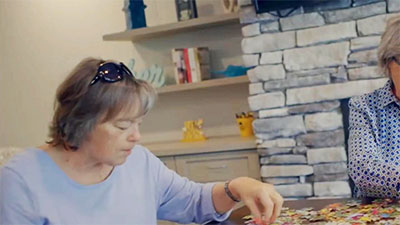
You tend to see much shorter, more frequent visits rather than long, stressful marathons. Households are familiar with not only the staff however also the other residents, and often their relatives. That cross-connection builds a sense of community and shared watchfulness that is hard to replicate in a big facility where you hardly ever face the exact same people at the very same time.
When a crisis does occur, such as a hospitalization or a major modification in habits, those existing relationships make preparing easier. You are not speaking with strangers about your loved one; you are talking with people who have actually peeled oranges for them, chuckled with them throughout music hour, and watched their nighttime habits.
Emotional safety and behavioral symptoms
People in some cases presume that small assisted living homes are best for "easy" residents and that those with more intense behavioral concerns from dementia require the infrastructure of a bigger memory care unit. The reality is more complicated.
Behavioral expressions like agitation, wandering, watching, or calling out often soften in environments where the individual feels seen and safe. Little homes are particularly proficient at developing that psychological safety.
Consider roaming. In a large neighborhood, a resident who continuously walks the halls is viewed as a fall threat and a guidance obstacle. Staff might try diversion activities, medications, and even protected systems. In a little home with enclosed outdoor area, that very same walking can be reframed as "Mr. Thompson's day-to-day path." Staff understand his pattern, stroll with him often, and keep subtle eyes on him when he remains in the yard.
When citizens feel less overwhelmed by noise and crowds, their nervous systems run cooler. That alone can reduce the need for psychotropic medications. It is not a cure, and small homes certainly have locals with challenging behaviors, however the baseline stress is typically lower.
There are trade-offs. Some small homes are not equipped for homeowners with serious physical hostility, two-person transfer needs, or intricate medical devices. Larger neighborhoods might have specialized memory care wings with more robust staffing ratios, on-site nurses, and access to therapy services. The secret is not to romanticize small homes as wonderful spaces where dementia ends up being easy, however to recognize that their very scale modifications how habits manifest and how relationships form the response.
When a bigger community might be a much better fit
Small does not equivalent better for each individual or every family. There are situations where a bigger assisted living or dedicated memory care neighborhood can use advantages.
If your loved one has a very high social drive and is still in earlier-stage dementia, they might enjoy the range and bustle of a larger setting, with more structured activities and more individuals to fulfill. Some big communities use specific programs, on-site physical therapy, visiting professionals, and transport options that little homes can not match.
Families who want a strong line between "home" and "care" sometimes feel more comfortable with a bigger, more formal environment. In a little residential care home, the intimacy can feel too close for some family characteristics. You might feel obligated to go to occasions or address more personal questions about family history than you would in a huge structure where anonymity is easier.
Cost can cut in any case. In some markets, little homes are more budget friendly than large neighborhoods; in others, they are priced as premium memory care. Insurance, veterans' benefits, and Medicaid waivers may apply in a different way depending on state policies and licensure categories.
The most sincere way to think of size is not as an ethical ranking however as a set of trade-offs. If you know that deep, constant relationships are vital for your loved one, then little homes deserve a major appearance, even if you likewise tour larger senior care campuses.
Questions to ask when touring small assisted living homes
A tour informs you a lot, but just if you understand where to look. When you visit a small assisted living or memory care home, a few targeted concerns can reveal how well the setting really supports strong connections in dementia care:
- How many residents live here, and what is the normal staff-to-resident ratio on days, evenings, and nights?
- How long have the majority of your caregivers operated in this home, and how do you manage turnover or staffing gaps?
- Can you explain a typical day for somebody with dementia who lives here, from getting up to bedtime?
- How do you be familiar with a brand-new resident's life story, regimens, and choices, and how is that details shared amongst staff?
- When a resident is upset or declining care, what are the first 3 things your group typically tries before considering medication or outside intervention?
Pay attention to how quickly staff members utilize citizens' names, who they present you to, whether homeowners make eye contact, and whether anyone appears parked in front of a television for long stretches. Notice the smells from the kitchen, the tone of background sound, and how personnel respond if a resident interrupts your tour.
The strongest small homes can answer detailed concerns without defensiveness, and they will typically volunteer stories that show their technique rather of relying only on policy language.
Bringing it back to what matters
Families often concern me inquiring about amenities, licensing, and care levels, but the concerns that eventually shape their peace of mind are quieter: Who will notice if my mother appears off? Who will sit with my husband when he is frightened during the night and can not keep in mind why? Who will commemorate the small triumphes that only matter if you truly understand the person?
Small assisted living homes and residential memory care homes are uniquely positioned to respond to those questions with something more than a pamphlet line. Their scale makes indifference harder and connection most likely. Staff and locals do not just share space; they share a life rhythm.
Assisted living, memory care, and respite care are not interchangeable labels. They are different setups of time, attention, and relationship. When dementia belongs to the image, that configuration matters more than practically anything else. A smaller setting does not remove the losses that include cognitive decrease, but it does include something just as genuine: the continuous, everyday experience of being known.
BeeHive Homes of Collierville provides assisted living care
BeeHive Homes of Collierville provides memory care services
BeeHive Homes of Collierville provides respite care services
BeeHive Homes of Collierville supports assistance with bathing and grooming
BeeHive Homes of Collierville offers private bedrooms with private bathrooms
BeeHive Homes of Collierville provides medication monitoring and documentation
BeeHive Homes of Collierville serves dietitian-approved meals
BeeHive Homes of Collierville provides housekeeping services
BeeHive Homes of Collierville provides laundry services
BeeHive Homes of Collierville offers community dining and social engagement activities
BeeHive Homes of Collierville features life enrichment activities
BeeHive Homes of Collierville supports personal care assistance during meals and daily routines
BeeHive Homes of Collierville promotes frequent physical and mental exercise opportunities
BeeHive Homes of Collierville provides a home-like residential environment
BeeHive Homes of Collierville creates customized care plans as residents’ needs change
BeeHive Homes of Collierville assesses individual resident care needs
BeeHive Homes of Collierville accepts private pay and long-term care insurance
BeeHive Homes of Collierville assists qualified veterans with Aid and Attendance benefits
BeeHive Homes of Collierville encourages meaningful resident-to-staff relationships
BeeHive Homes of Collierville delivers compassionate, attentive senior care focused on dignity and comfort
BeeHive Homes of Collierville has a phone number of (901) 286-3455
BeeHive Homes of Collierville has an address of 1368 Wolf River Blvd, Collierville, TN 38017
BeeHive Homes of Collierville has a website https://beehivehomes.com/locations/collierville/
BeeHive Homes of Collierville has Google Maps listing https://maps.app.goo.gl/F1PuQmWyGT6PTGmY6
BeeHive Homes of Collierville has Facebook page https://www.facebook.com/BeeHiveCollierville
BeeHive Homes of Collierville has Instagram page https://www.instagram.com/beehivecollierville/
BeeHive Homes of Collierville won Top Assisted Living Homes 2025
BeeHive Homes of Collierville earned Best Customer Service Award 2024
BeeHive Homes of Collierville placed 1st for New Mexico Senior Living Communities 2025
People Also Ask about BeeHive Homes of Collierville
What is BeeHive Homes of Collierville Living monthly room rate?
The rate depends on the level of care that is needed. We do an initial evaluation for each potential resident to determine the level of care needed. The monthly rate is based on this evaluation. There are no hidden costs or fees
Can residents stay in BeeHive Homes of Collierville until the end of their life?
Usually yes. There are exceptions, such as when there are safety issues with the resident, or they need 24 hour skilled nursing services
Do we have a nurse on staff?
Yes, we have a part-time nurse with an on-call nurse if needed for after hours. We also have a Med Tech on staff that can administer medications
What are BeeHive Homes of Collierville's visiting hours?
Visiting hours are adjusted to accommodate the families and the resident’s needs… just not too early or too late
Do we have couple’s rooms available?
Yes, each home has rooms designed to accommodate couples. Please ask about the availability of these rooms
Where is BeeHive Homes of Collierville located?
BeeHive Homes of Collierville is conveniently located at 1368 Wolf River Blvd, Collierville, TN 38017. You can easily find directions on Google Maps or call at (901) 286-3455 Monday through Sunday Open 24 hours
How can I contact BeeHive Homes of Collierville?
You can contact BeeHive Homes of Collierville by phone at: (901) 286-3455, visit their website at https://beehivehomes.com/locations/collierville/ or connect on social media via Facebook or Instagram
Conveniently located near Beehive Homes of Collierville Malco Collierville Towne Cinema Grill & MXT a great movie theater with full food & drink menu. Catch a movie and enjoy some great food while you wait.